
Social media has become one of the most powerful ways for businesses to connect with customers. Whether you run a small local business, an online store, a personal brand, or a growing company, social media can help you build awareness, attract potential customers, and develop long-term relationships with your audience.
However, getting started can feel overwhelming. There are many platforms, different types of content, changing algorithms, and countless marketing strategies to consider.
The good news is that you don’t need to be an expert to get started.
With a clear strategy and consistent effort, beginners can use social media marketing effectively. This guide explains what social media marketing is, why it matters, which platforms to choose, what content to create, and how to measure your results.
What Is Social Media Marketing?
Social media marketing is the process of using social media platforms to promote a business, product, service, or personal brand.
It involves creating and sharing content, communicating with followers, building a community, increasing brand awareness, and ultimately achieving business goals such as generating leads or sales.
Popular social media platforms include:
- YouTube
- TikTok
- X
You don’t necessarily need to use every platform. In fact, beginners are often better off focusing on one or two platforms where their target audience is most active.
Why Is Social Media Marketing Important?
Social media gives businesses an opportunity to reach potential customers where they already spend time online.
One of its biggest advantages is accessibility. A small business can create an account and start building an audience without requiring the large advertising budgets traditionally associated with marketing.
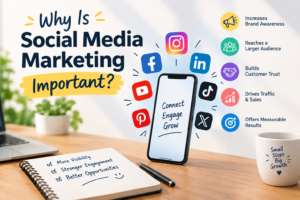
Social media can help businesses:
- Increase brand awareness
- Reach new audiences
- Build customer relationships
- Generate website traffic
- Promote products and services
- Collect customer feedback
- Generate leads
- Increase sales
- Build credibility
Social media also allows businesses to communicate directly with their customers. Instead of simply broadcasting advertisements, brands can answer questions, respond to comments, and participate in conversations.
Step 1: Define Your Social Media Goals
Before creating your first post, decide what you want to accomplish.
A common mistake beginners make is posting content without having a clear objective. You should know what success looks like before starting.
Your goals might include:
- Increasing brand awareness
- Getting more website visitors
- Generating leads
- Increasing online sales
- Growing a community
- Improving customer service
- Establishing industry authority
Try to make your goals specific and measurable.
For example, instead of saying, “I want more followers,” you could set a goal such as:
“Grow our Instagram audience by 1,000 relevant followers in three months.”
Specific goals make it easier to measure progress and determine whether your strategy is working.
Step 2: Identify Your Target Audience
You can’t create effective social media content if you don’t understand who you’re trying to reach.
Think about your ideal customer.
Consider factors such as:
- Age
- Location
- Occupation
- Interests
- Problems
- Buying habits
- Goals
- Online behavior
For example, a fitness business targeting university students might use different content from a company selling financial services to business owners.
Understanding your audience helps you choose the right platforms and create content that is relevant to them.
Instead of asking, “What should I post?” ask:
“What would my target audience find useful, interesting, or entertaining?”
That change in perspective can significantly improve your content strategy.
Step 3: Choose the Right Social Media Platforms
You don’t need to be everywhere.
Each platform has different audiences, formats, and strengths.
Instagram is highly visual and works well for businesses that can showcase products, services, people, or creative content.
Photos, short-form videos, Stories, and educational content can all be effective.
Facebook can be useful for reaching broad audiences, building communities, sharing updates, and promoting local businesses.
YouTube
YouTube is ideal for long-form video content such as tutorials, product demonstrations, educational videos, reviews, and interviews.
LinkedIn is particularly useful for B2B businesses, professionals, recruiters, consultants, and companies that want to establish industry authority.
TikTok
TikTok focuses heavily on short-form video and can be useful for brands that can create entertaining, educational, or trend-driven content.
Pinterest can be valuable for businesses in areas such as fashion, food, home décor, travel, crafts, and other visually searchable categories.
Start with one or two platforms rather than trying to manage everything at once.
Step 4: Optimize Your Social Media Profile
Your profile is often the first impression someone has of your business.
Make sure your profile clearly communicates who you are and what you offer.
Use:
- A recognizable profile image or logo
- A clear username
- A concise description
- Relevant keywords
- A link to your website or landing page
- Contact information where appropriate
- Consistent branding
Your bio should answer a simple question:
Why should someone follow or contact you?
Avoid filling your profile with complicated language. Keep it clear and customer-focused.
Step 5: Create a Content Strategy
Posting randomly isn’t a strategy.
Before creating content, decide what categories of content you want to publish.
For example, a digital marketing agency might use these content pillars:
Educational content: SEO tips, advertising advice, and marketing tutorials.
Behind-the-scenes content: Team activities and company culture.
Social proof: Customer testimonials, reviews, and case studies.
Promotional content: Services, products, discounts, and special offers.
Engagement content: Questions, polls, quizzes, and discussions.
Having content pillars makes it easier to consistently come up with ideas.
Step 6: Create Valuable Content
Good social media content should provide value.
Value doesn’t always mean teaching something. Content can also entertain, inspire, inform, or help people solve problems.
Some popular content formats include:
- Short videos
- Images
- Carousels
- Infographics
- Tutorials
- Customer stories
- Polls
- Questions
- Live videos
- Blog posts
- Testimonials
For example, a bakery could post a behind-the-scenes video showing how a popular cake is made.
A software company could publish a short tutorial demonstrating how to solve a common customer problem.
A marketing consultant could share three practical SEO tips.
The key is to make the content relevant to the audience.
Step 7: Be Consistent
You don’t need to post multiple times a day. What matters most is creating a realistic posting schedule that you can consistently maintain.
Consistency is one of the most important parts of social media marketing.
For example, a beginner might start with:
- 3 social posts per week
- 2 short-form videos per week
- Daily engagement with relevant comments and messages
The exact schedule will depend on your business and platform.
Creating a content calendar can make the process much easier. Plan your posts in advance so you’re not trying to think of something to publish at the last minute.
Step 8: Engage With Your Audience
Social media isn’t just about publishing content.
It’s also about being social.
Respond to comments, answer questions, acknowledge mentions, and reply to messages.
When people take the time to interact with your business, responding shows that you value them.
You can also actively participate in relevant conversations instead of waiting for people to find you.Building genuine relationships can turn casual followers into loyal, long-term customers.
Step 9: Use Hashtags and Keywords Strategically
Depending on the platform, hashtags and keywords can help people discover your content.
However, using dozens of unrelated hashtags isn’t a good strategy.
Focus on terms that are genuinely relevant to your business and audience.
For example, a local photography business might use terms related to photography, weddings, portraits, and
its service area.Consider what your potential customers are most likely to search for.
Also pay attention to the words you use in your captions, titles, descriptions, and profile. Social platforms increasingly function as search engines, so clear and relevant language can help users discover your content.
Step 10: Consider Paid Social Media Advertising
Organic social media can help build an audience, but paid advertising can help you reach specific groups of people more quickly.
Most major social platforms offer advertising tools that allow businesses to target audiences based on characteristics such as location, interests, demographics, or online behavior.
Beginners should avoid spending large amounts immediately.
Start with a small budget, test different creative ideas, and measure the results.
For example, you could test two different advertisements with different headlines or images and compare their performance.
The goal isn’t simply to spend more money. It’s to understand which messages and audiences produce meaningful results.
Step 11: Track Your Performance
One of the biggest advantages of digital marketing is the ability to measure results.
Social media platforms provide analytics that can help you understand how your content performs.
Important metrics may include:
- Reach
- Impressions
- Engagement
- Video views
- Profile visits
- Website clicks
- Leads
- Conversions
- Follower growth
Don’t focus only on follower count.
A smaller audience that regularly engages with your content and becomes customers can be much more valuable than a large audience that never interacts with your business.
Choose metrics that connect directly to your goals.
Common Social Media Marketing Mistakes
Beginners often make several avoidable mistakes.
Posting Only Promotional Content
If every post asks people to buy something, followers may lose interest.
Use a mixture of educational, entertaining, engaging, and promotional content.
Trying to Use Every Platform
Managing six platforms at once can quickly become overwhelming.
Start with the platforms that matter most to your audience.
Ignoring Comments and Messages
Social media is a two-way communication channel. Don’t treat it like a digital billboard.
Copying Competitors
Your competitors can provide inspiration, but your brand should develop its own voice and perspective.
Expecting Immediate Results
Building a social media audience takes time. Focus on consistency, experimentation, and learning.
A Simple Social Media Strategy for Beginners
If you’re completely new to social media marketing, start simple.
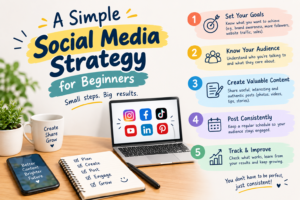
First, choose one primary platform.
Next, define your target audience and one or two measurable goals.
Then create three or four content pillars and develop a weekly content calendar.
For example:
Monday: Educational tip
Wednesday: Short video
Friday: Customer story or testimonial
Sunday: Engaging question
After publishing, monitor your results and identify which content performs best.
Over time, create more of what your audience responds to and reduce content that consistently performs poorly.
Final Thoughts
Social media marketing doesn’t have to be complicated.
You don’t need thousands of followers or a huge advertising budget to get started. What you need is a clear understanding of your audience, realistic goals, valuable content, consistency, and a willingness to learn.
Start with one or two platforms. Create useful content. Engage with your audience. Measure your results. Then improve your strategy based on what the data tells you.
The most successful social media marketers aren’t necessarily the people who post the most. They’re the ones who understand their audience and consistently give people a reason to pay attention.
Start small, stay consistent, and treat social media as a long-term relationship-building channel rather than a quick path to sales